
The New North: Vermont’s Wine Country
“Vermont…wines [can] be absolutely delicious,…they can age and evolve in fascinating ways.
Eric Asimov, THE NEW YORK TIMES
There is a long history of grape vines in America, both hybrid and wild, and in the 1800s during The Great Wine Blight in Europe, these early American grape varieties made an impact abroad, especially in France, inspiring both American and French horticulturists to breed both American hybrid and wild varities with French Vitis vinifera for resistance, resilience, taste, and hardiness.
Prohibition put a dent in the once vibrant East Coast and Midwest grape and wine culture rooted in historic American and French-American vines.
When Prohibition was revoked, California found itself at the center of wine production because of its ability to grow traditional European varieties. These varieties cannot grow in New England or the Upper Midwest because they cannot survive the cold, and while some continued to try their hand with the old American and French-American grapes, some of these varieties struggled to ripen every year during the short growing season, and by the middle of the last century, many of the historic American hybrid varieties had fallen out of favor.
But over the past few decades, everything changed.
Innovative yet traditional breeding programs—particularly at the University of Minnesota—have bred a new generation of cold-climate grape varieties capable of surviving the harsh winters of the North while producing exceptional wines. At the same time, pioneering breeder Elmer Swenson developed a remarkable collection of hardy grapes in Wisconsin that have become foundational to northern vineyards.
These varieties can survive temperatures as low as –25°F, –35°F, and even –40°F, making vineyards possible in places once considered unimaginable for wine production—from Minnesota to Quebec, and throughout Vermont.
These varieties are resistant against various grape diseases and have shown they are resilient in the face of climate chaos making Vermont at the forefront of the global wine conversation related to the climate-related challenges facing winegrowers today.
Today, the world of grape growing has truly moved north.
Vermont’s Emerging Wine Scene
From a handful of progressive winemakers just a generation ago, Vermont’s wine community is now rapidly expanding. Today the state is home to more than a dozen registered wineries and many vineyards, with new plantings appearing each year.
Winemakers across Vermont are producing world-class wines from cold-hardy grapes such as:
These are joined by newer varieties coming on the scene like Verona, Petite Pearl, Itasca. And while some producers plant new experimental varieties like these, others also begin to revitalize some of the historic varieties like Leon Millot and Marechal Foch as climate change shifts our weather patterns.
A Tradition of Place
Wine lovers around the world value wines that reflect their origins—wines made by real people, from local land, expressing the character of a place.
Vermont’s winemakers and grape growers are part of this tradition. Working with challenging conditions and new American grape varieties, they are shaping a distinct northern wine identity.
Events like Vinous Rebellious, our annual Vermont Wine Fair celebrate this spirit: a chance to meet the growers, taste their wines, and experience the creativity driving Vermont’s young and exciting wine region.
The future of northern wine is bright.
Vermont Wine Grapes & Specialty Wines
Red Wine Grapes: A Few
Frontenac
Extremely cold-hardy, surviving temperatures as low as –30°F. Wines often show cherry, berry, and plum aromas with a deep garnet color.
Marquette
One of the most exciting northern red grapes. Complex wines with cherry, berry, spice, and black pepper, with more structure and tannin than many cold-climate reds.
St. Croix
A long-time favorite across northern vineyards. Wines are known for their pleasant berry fruit character and approachable style.
White Wine Grapes: A Few
La Crescent
A standout white grape developed in Minnesota. Known for intense apricot and stone-fruit aromas, balanced acidity, and vibrant flavor.
Traminette
Developed at Cornell University, this hybrid of Gewürztraminer produces aromatic, spicy wines that pair beautifully with flavorful cuisine.
Frontenac Blanc
Frontenac Blanc is a sport of the Elmer Swenson variety Frontenac Noir, and is known for aromas of citrus and pineapple, vibrant acidity, and great texture.
Frontenac
La Crescent
Marquette
St. Croix
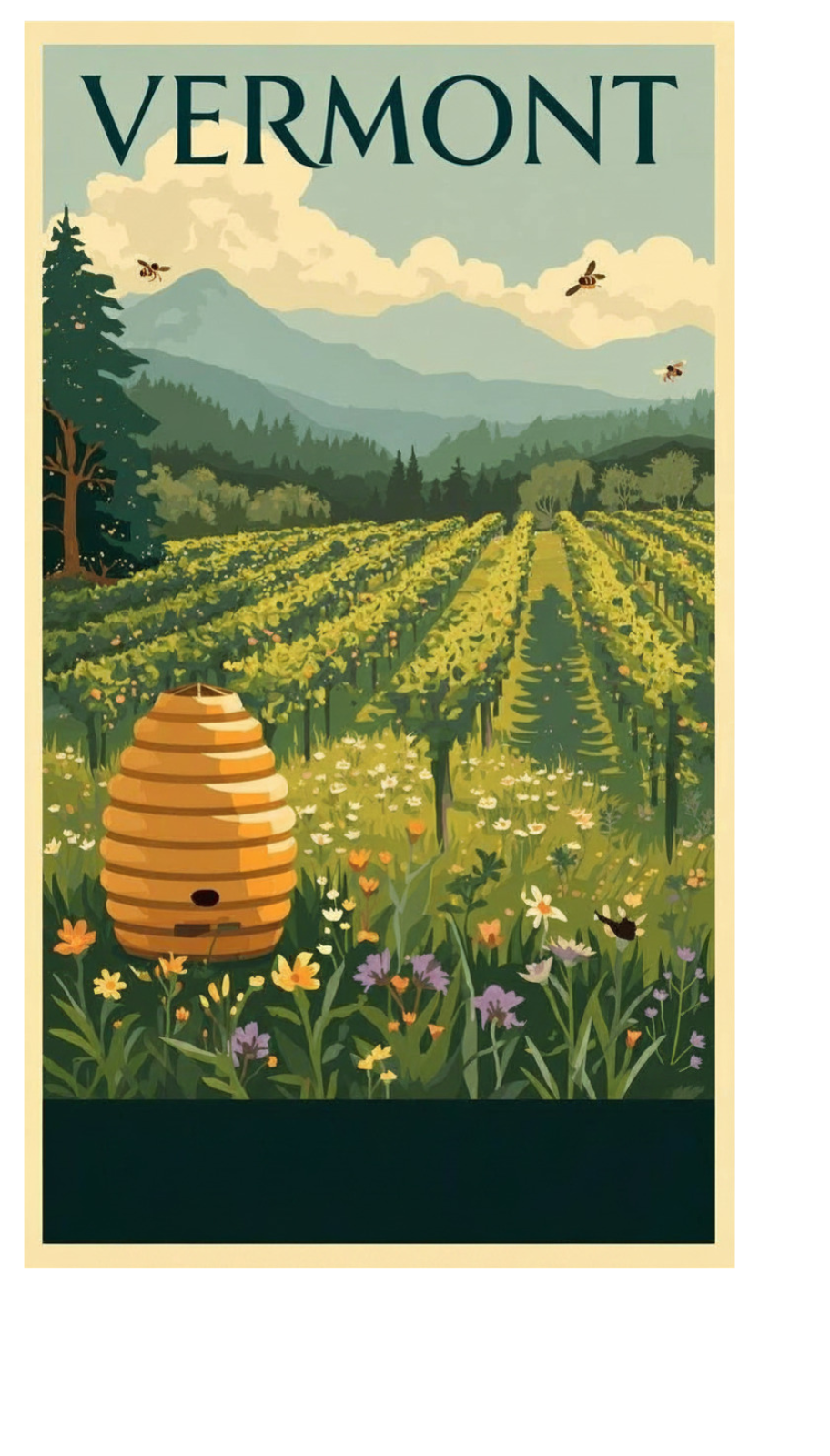
Vermont’s agricultural landscape offers more than grapes alone. The region is also ideal for:
Beekeeping
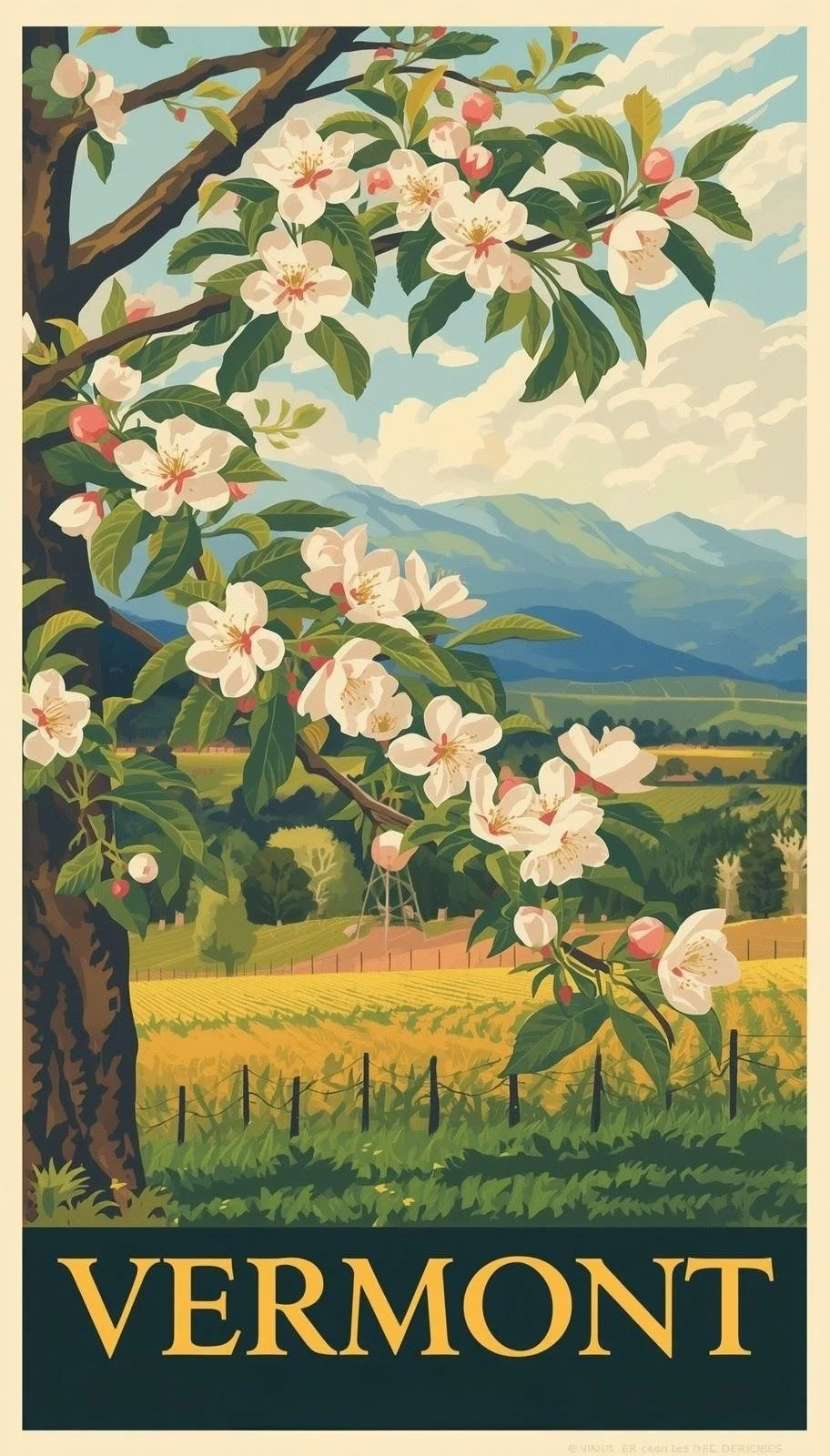
Apple orchards
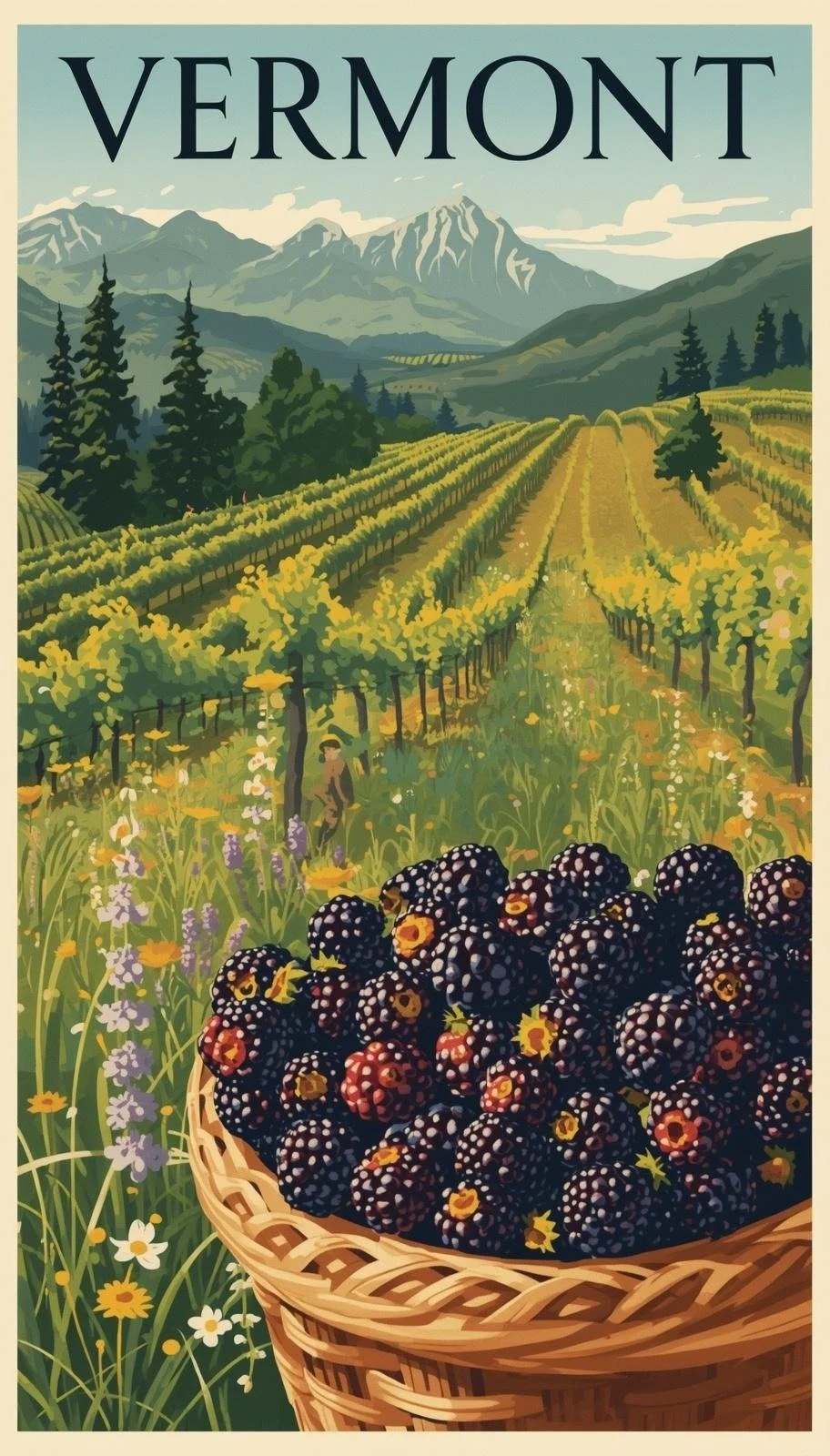
Berry farms
As a result, Vermont producers craft a wide range of beverages including meads, ciders, and fruit wines, all reflecting the state’s agricultural diversity.
Other Vermont Wines
Cider
Hard cider was once more common than beer in America. Vermont’s apples now produce exceptional hard cider and ice cider, the latter concentrated using natural winter cold.
Mead
Wine made from honey—the oldest fermented beverage known. Vermont’s growing beekeeping industry has fueled a modern renaissance of this ancient drink.
Fruit Wines
Producers throughout Vermont craft wines from apples, raspberries, pears, blueberries, cranberries, and rhubarb, ranging from dry table wines to rich dessert styles.